Red-necked wallaby
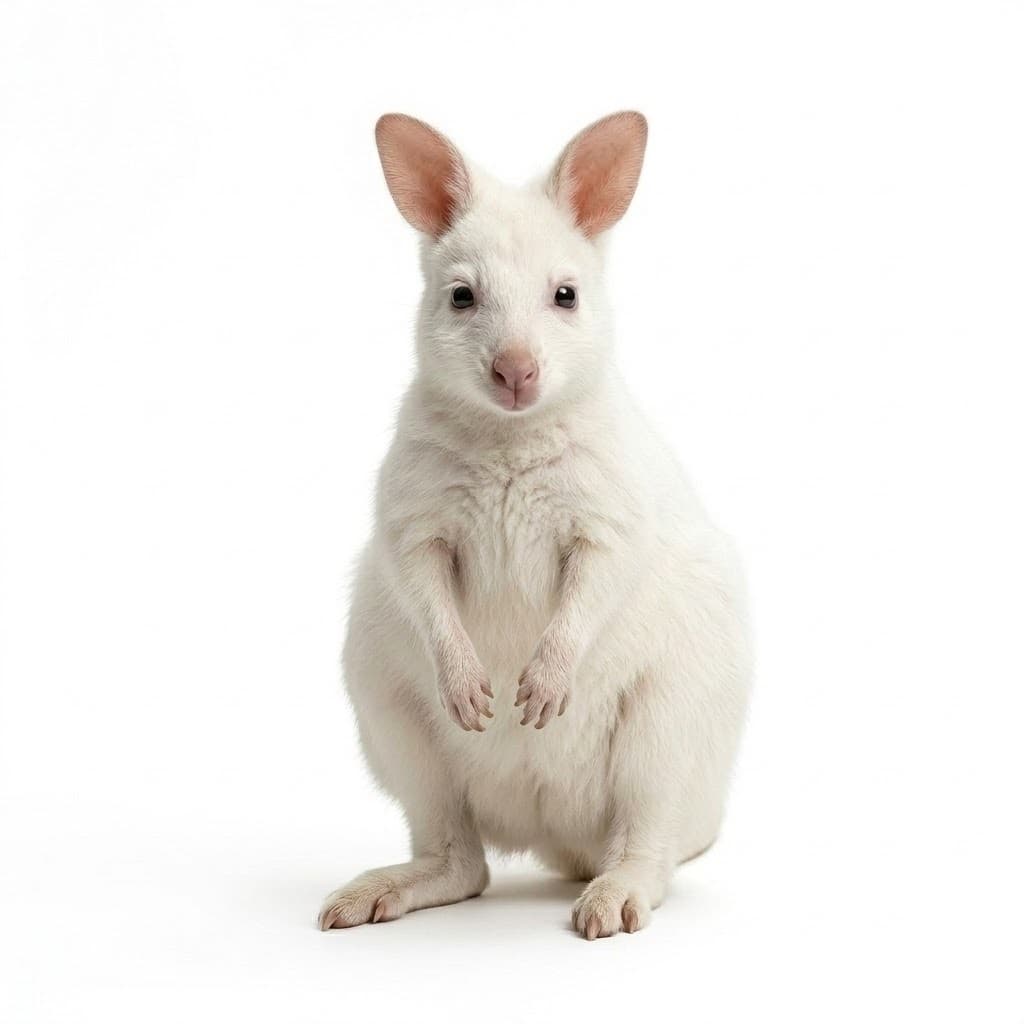
Not a miniature kangaroo
Wallabies and kangaroos are relatives, but a wallaby is not a "mini kangaroo." Wallabies form their own branch and are much smaller: an adult stands 45–105 cm tall and weighs 5–25 kg, while a red kangaroo can reach 1.8 m and 90 kg.
The name "wallaby" comes from the language of the Darug people of the Sydney region. More than thirty wallaby species live across Australia.
Spring-loaded leaps
A wallaby's hind legs act like springs. The Achilles tendons store energy on landing and release it in the next leap. A wallaby can jump 1.8 m high and 3 m forward simply to inspect an unfamiliar shadow. It is not attacking or panicking, only checking: leap up, look, then return to the same place.
The thick, muscular tail serves as a fifth leg, balancing the animal while standing and steering it while running. The large ears rotate independently, detecting distant sounds without any need to turn the head.
The story inside the pouch
The most remarkable feature of wallabies, like all marsupials, is their reproduction. A newborn joey is only the size of a bean. It crawls into its mother's pouch and remains there for eight to nine months. Even when nearly grown, it continues peeking out to watch the world before finally leaving.
At ZooJung
The wallabies on Floor 2 live in an Uluru-inspired space. They are gentle and often stand still to watch visitors. If one suddenly leaps, do not be startled — it is only the animal's checking reflex.
📍 ZooJung — 99 Pham Van Dong, Nha Trang
Meet Red-necked wallaby every day at ZooJung · 99 Pham Van Dong, Bac Nha Trang Ward