Capybara
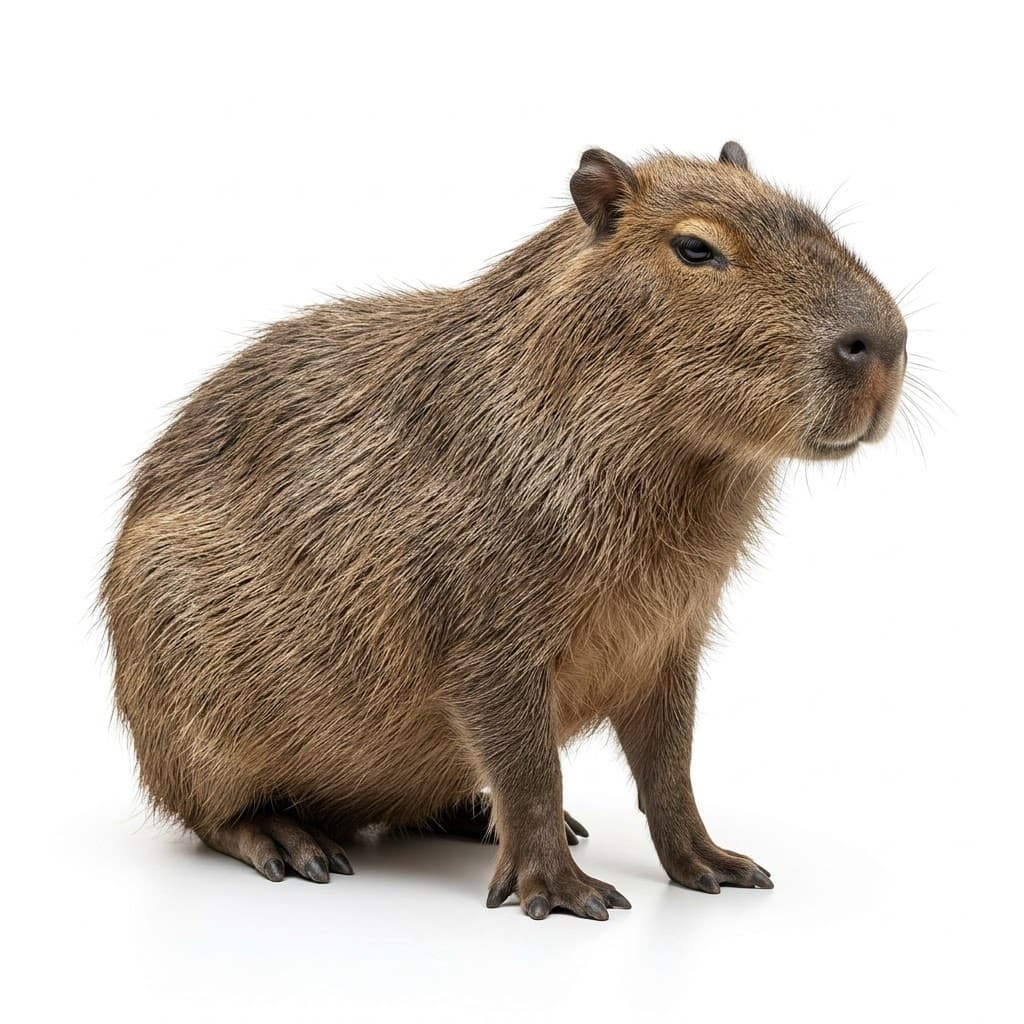
The world's largest rodent
Capybaras can weigh 65 kg — as much as an adult person. They are one hundred times larger than their close relatives, guinea pigs. Size, however, is not what made capybaras famous.
What made them famous is their attitude. They remain so calm that crocodilians can sit beside them and birds can perch on their heads without provoking a response. This is not laziness — it is the confidence of an animal with almost no natural predators once fully grown.
Built for a semi-aquatic life
A capybara's eyes, nostrils, and ears sit in one line along the top of its head. This lets the animal remain almost entirely submerged while still seeing, smelling, and hearing everything nearby. Its feet are webbed. Underwater, it can hold its breath for up to five minutes — long enough to lose a caiman in the murky currents of the Amazon.
An organized society
Capybaras live in groups of 10–20, which can grow to a hundred in the dry season. A group includes one dominant male, several subordinate males, and many females with their young. They communicate with more than eleven kinds of sounds, including whistles, growls, and whimpers.
The dominant male marks territory with a scent gland on his snout. If you see a capybara rubbing its nose against the fence at ZooJung, that is "diplomacy," not an itch.
At ZooJung
Capybaras are the final highlight of the journey because they do not need to impress with spectacle. Their calm, approachable, unhurried manner is what makes visitors slow down and actually observe.
Observation tip: Do not expect capybaras to "perform." They do not. The pleasure lies in watching them graze, soak in the water, glance at you, and return to their day. For children, this offers a rare lesson: an animal does not need to do something dramatic to be worth watching.
📍 ZooJung — 99 Pham Van Dong, Nha Trang
Meet Capybara every day at ZooJung · 99 Pham Van Dong, Bac Nha Trang Ward