Sulcata Tortoise
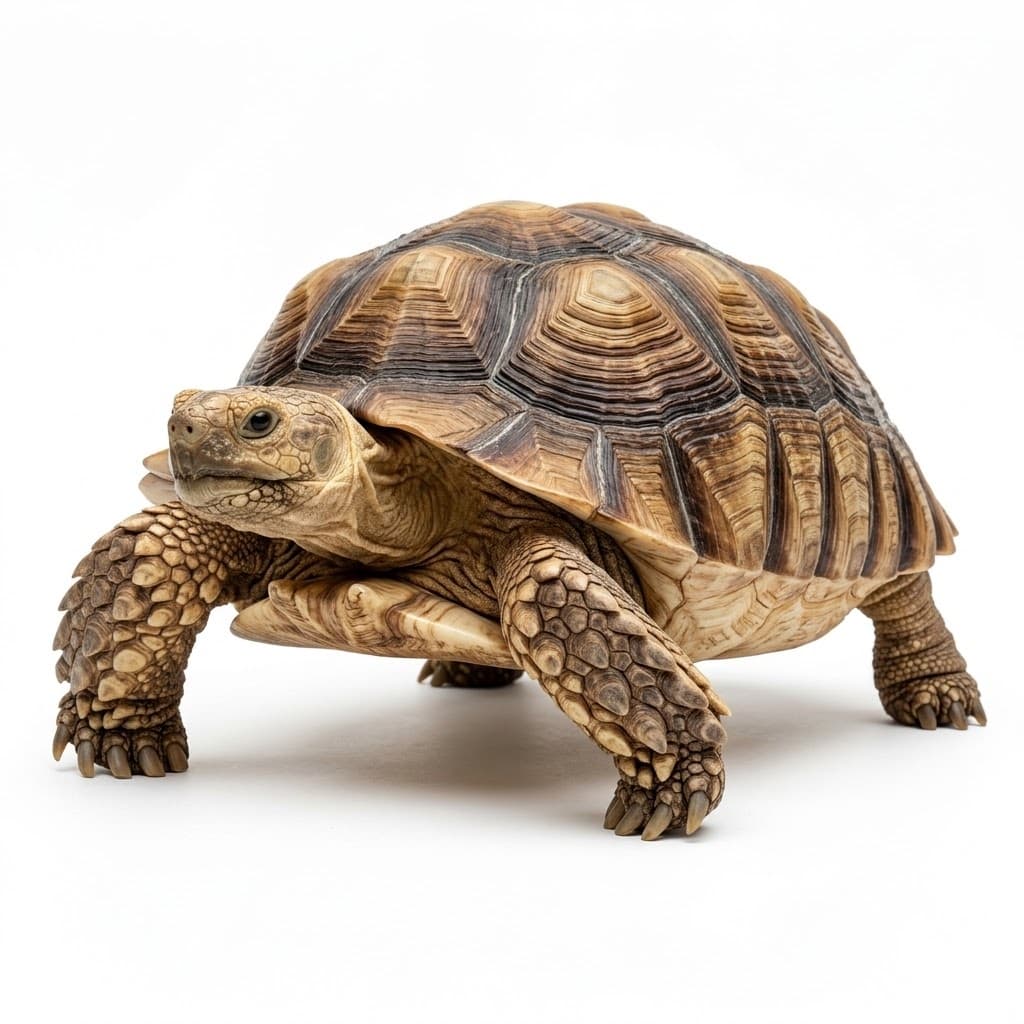
Slow — with purpose
Turtles have existed for more than 220 million years. To put that in perspective, their ancestors appeared before the dinosaurs. When the dinosaurs became extinct, turtles carried on — through two mass-extinction events.
A slow metabolism, low energy needs, and limited dependence on changing environmental conditions have served them well. Their slowness is a strategy, not a flaw.
An extraordinary body
A turtle's shell is not a separate case, as many people imagine. It is formed from ribs and vertebrae that extend outward and remain fused to the body. A turtle cannot "come out of its shell." The shell is both armor and home.
More than 360 turtle species live around the world, from sea turtles weighing hundreds of kilograms to tortoises small enough to fit in your hand. All of them breathe with lungs, lay their eggs on land, and move at a pace entirely their own.
What about at ZooJung?
The turtles on Floor 1 live in dry Sahel habitat with basking and hiding areas. This is the quietest floor — fittingly, because turtles do not enjoy noise.
Observation tip: When they start to move, pause and watch. At other times they often remain still. Do not assume they are "doing nothing" — they are conserving energy, just as their ancestors have done for 220 million years.
For children: Ask what turtles breathe with. (Lungs — not gills like fish.) Ask whether the shell is made of bone. (It is, and it is connected to the spine.)
📍 ZooJung — 99 Pham Van Dong, Nha Trang
Meet African spurred tortoise every day at ZooJung · 99 Pham Van Dong, Bac Nha Trang Ward